Are you trying to figure out whether a La Jolla condo is the right lifestyle move, the right financial move, or both? In a market where ocean views, walkable pockets, and building amenities can shift value fast, condo living is rarely a simple apples-to-apples comparison. If you want a clearer picture of where condos cluster, what amenities really matter, and how to judge value with confidence, you are in the right place. Let’s dive in.
Where condos are concentrated in La Jolla
La Jolla is a coastal San Diego community of roughly 5,718 acres, and it is about 99 percent built out. That matters because most residential change now tends to come from infill rather than large new neighborhood development. In practical terms, condo supply is shaped by existing land use patterns, not wide-open growth areas.
The main condo clusters tend to appear in and around the Village and Prospect corridor, La Jolla Boulevard and Beach-Barber near Windansea, La Jolla Shores, and several larger amenity-driven complexes farther inland near Regents and Via Alicante. Current listing patterns support that layout, with condo addresses often showing up on streets like Prospect Street, Coast Boulevard, Eads Avenue, La Jolla Boulevard, Via Mallorca, and Via Alicante.
La Jolla’s geography also helps explain why one condo can feel very different from another. The community includes ocean bluffs, beaches, canyons, hillsides, and Mount Soledad, which makes view corridors a major part of pricing and desirability. Even within the same ZIP code, your experience can shift quickly based on elevation, outlook, and distance to the coast.
Village and Prospect corridor
If you want a more urban coastal feel, the Village and Prospect area is one of the clearest condo hubs. This pocket tends to attract buyers who want close access to shopping, dining, and day-to-day convenience in a compact setting. It is also where you are more likely to see luxury attached homes with higher-end common features and more service-oriented buildings.
Listings in this area often sit in premium price tiers because you are paying for a combination of location, walkability, and in some cases strong ocean-view positioning. For many buyers, the appeal is simple: less home maintenance and more immediate access to the La Jolla lifestyle.
La Jolla Boulevard and Beach-Barber
Along La Jolla Boulevard and into the Beach-Barber area, condo living often feels more neighborhood-based while still offering strong coastal access. Some listings here highlight proximity to Windansea Beach or a short walk to nearby shops and restaurants. That can make this area appealing if you want beach access without being in the middle of the Village environment.
Buildings in this part of La Jolla can vary widely in age, layout, and amenity package. That means value often comes down to the individual property, the HOA, parking, and whether the unit has been updated well.
La Jolla Shores
La Jolla Shores is another important condo location because the city land-use map shows medium- and high-density residential plus commercial and mixed-use designations there. That helps explain why condos and townhomes appear more often in the Shores than in surrounding blocks dominated by detached homes.
For buyers, the Shores can offer an appealing middle ground. You may find a more beach-oriented setting with easier access to shoreline recreation, while still having attached-home options that are harder to find in many nearby single-family areas.
Regents and Via Alicante
Farther inland, larger condo communities near Regents and Via Alicante often stand out for shared amenities. These properties can appeal to buyers who want a broader amenity package, more predictable community structure, or a lower price point than the most coastal blocks in La Jolla.
This part of the market can be especially relevant if you are comparing lifestyle needs against budget. While you may not get the same immediate beach adjacency as the Village or Shores, you may gain more in terms of facilities, square footage, or building features.
What amenities you can expect
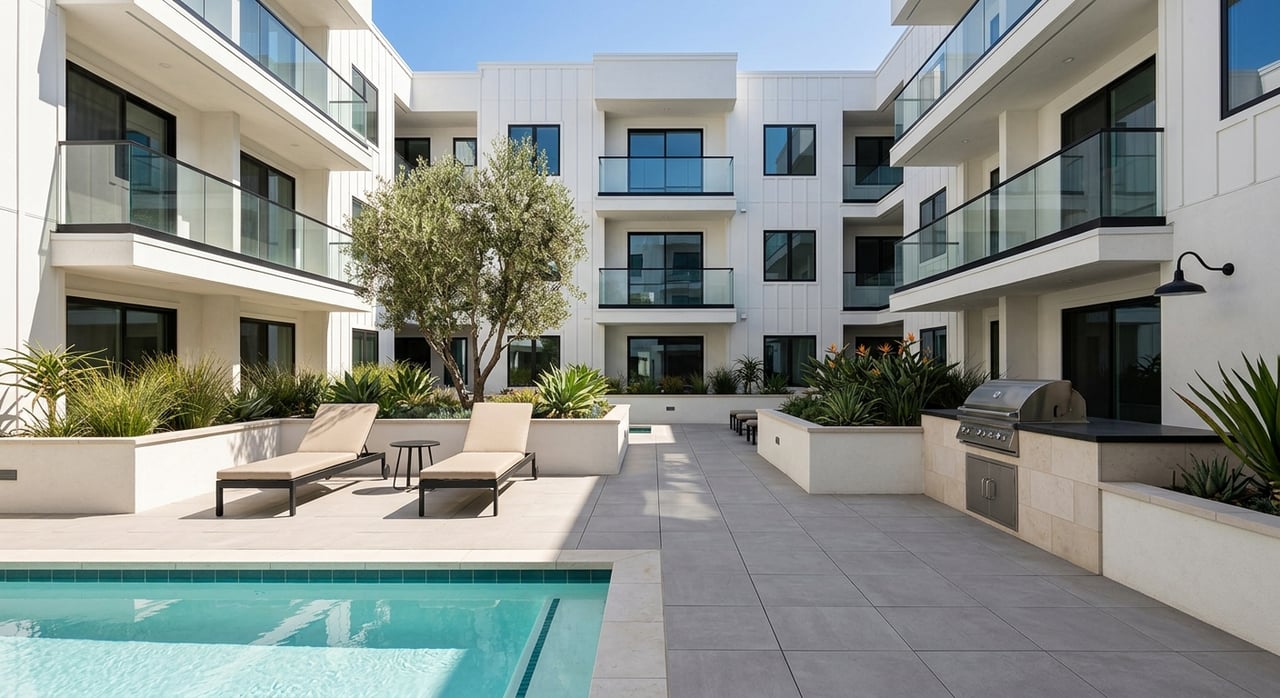
La Jolla condo amenities vary sharply by building and price tier. At the top end, some Village-adjacent luxury buildings advertise private elevator entry, valet parking, roof decks, indoor lap pools, saunas, wine lockers, storage, and concierge service. In larger amenity communities, you may also see pools, cabanas, a fitness center, barbecue areas, a business center, and evening security.
More modest buildings usually offer a simpler package. Common features can include secured entry, elevators, a pool or spa, and assigned parking instead of full-service amenities. That does not make one type better than the other, but it does mean you should be clear about what you will actually use.
Amenities and HOA dues go together
One of the biggest mistakes buyers make is looking at HOA dues without looking at what those dues cover. In La Jolla, the monthly fee often reflects both the amenity package and the level of building operations. A building with two pools, spas, saunas, clubhouses, and an exercise room may carry a very different monthly cost than a service-heavy building with an onsite manager, elevators, and dues that also include utilities like water, gas, and trash.
Some higher-end buildings push dues even further when the association also covers insurance and offers more complex service layers. That is why I recommend comparing dues in context, not in isolation. A lower fee is not automatically the better value if the building is underfunded or if you are giving up amenities and services you actually want.
HOA issues that matter most
In California, condo ownership is closely tied to the homeowners association. You own your unit and share ownership of common areas, while the HOA manages those shared spaces, enforces rules, and collects monthly fees for maintenance, operations, and amenities. That structure can work well, but only if you understand the association behind the property.
Before you buy, make sure the HOA is part of your financial review, not an afterthought. Condo dues should be part of your mortgage budgeting from day one, and you should also plan for the possibility of future increases.
Review the HOA documents carefully
California law requires an annual HOA budget report with important details that buyers should review closely. That report includes a reserve summary, reserve funding plan, any known deferral of major repairs, anticipated special assessments, outstanding loans, and a summary of insurance policies that may include property, liability, earthquake, flood, and fidelity coverage.
State law also requires reserve studies at least once every three years, with an annual review. In addition, special assessments that exceed 5 percent of the budgeted gross expenses in the aggregate require owner approval. For condo buyers, these rules make the HOA file one of the most important parts of due diligence.
Confirm financing approval status
For some buyers, financing can depend on the project itself, not just personal qualification. The annual report for a condominium project must state FHA and VA approval status. If you plan to use one of those loan types, checking approval early can save time and avoid surprises.
Think through insurance exposure
In coastal La Jolla, insurance planning deserves extra attention. The California Earthquake Authority says condo unit owners generally need separate earthquake coverage, and loss-assessment coverage can help pay a share of certain HOA levies for earthquake damage repairs or a master policy deductible.
This matters because a condo can appear affordable based on the list price alone while still carrying meaningful exposure through reserves, deductibles, or future assessments. A careful review helps you understand the real cost of ownership, not just the entry price.
What drives condo value in La Jolla
La Jolla condos sit in a wide pricing range, and value is usually driven by much more than bedroom count or square footage. According to SDAR’s May 2026 update for 92037, the year-to-date median sales price for attached homes was $1,270,000, compared with $3,700,000 for detached homes. That gap helps explain why condos remain a lower-entry way to buy into this premium coastal market.
Supply also stays relatively tight. The same SDAR update shows new listings down 8.3 percent year to date for attached homes and 16.5 percent for detached homes. In a built-out community like La Jolla, limited inventory can continue to support pricing.
Micro-location matters more than averages
Current market snapshots show a broad range of condo asking prices in La Jolla. Recent listings span from about $524,000 for a Via Alicante unit to more than $2.9 million and even above $4 million for units on Coast Boulevard and Prospect Street. That spread tells you something important: La Jolla condo value is heavily tied to micro-location and building quality.
A condo near the Village, a unit with ocean views, or a property steps from the beach can trade in a completely different tier than a more inland unit with similar square footage. If you are evaluating value, broad neighborhood averages only get you so far.
Views and localized walkability create premiums
The City describes La Jolla as a destination with beaches, shopping, dining, events, parks, and a recreation center. At the same time, the overall neighborhood carries a Walk Score of 29, which means walkability is not consistent across the community.
That is why localized walkability matters so much in this market. Listings often emphasize being steps from the Village, close to Bird Rock shops and restaurants, or a short stroll to Windansea Beach. In other words, the walkability premium tends to be highly concentrated in certain blocks rather than spread evenly across all of La Jolla.
Age matters, but condition can offset it
Older buildings do not automatically mean poor value. Research shows that building age is usually associated with a negative price effect, but renovation and maintenance can offset part of that discount. La Jolla examples reflect that pattern, with older condos still trading at very different price points depending on updates, location, and amenity profile.
In real-world terms, I would not judge a La Jolla condo by age alone. Location, view, floor plan, parking, HOA financial health, and the quality of renovations often matter just as much.
Why condo living works for many buyers
For many buyers, condo living is the clearest path to owning in La Jolla without taking on the full upkeep of a detached home. That can be especially appealing if you want beach access, lower-maintenance living, or a lock-and-leave setup for a lifestyle-focused purchase.
The tradeoff is also clear. You are often paying for proximity, shared amenities, and convenience while accepting HOA oversight, common walls, and the need for more careful review of reserves, assessments, and insurance. When you understand that balance upfront, it becomes much easier to choose the right building and avoid expensive surprises.
If you are comparing condo options in La Jolla, I can help you look beyond the listing photos and evaluate the details that really affect value, maintenance risk, and long-term usability. When you are ready to talk through neighborhoods, HOA review, or the realistic upside of a specific property, connect with Ben Smith.
FAQs
Where are most condos located in La Jolla?
- Most La Jolla condos cluster around the Village and Prospect corridor, La Jolla Boulevard and Beach-Barber, La Jolla Shores, and larger inland communities near Regents and Via Alicante.
What amenities do La Jolla condos usually offer?
- Amenities vary by building and price tier, but common options include secured entry, elevators, pools, spas, assigned parking, fitness rooms, clubhouses, concierge service, valet parking, roof decks, and onsite management.
Why are HOA documents important for La Jolla condo buyers?
- HOA documents can show reserve funding, deferred repairs, anticipated special assessments, outstanding loans, insurance coverage, and financing approval status, all of which affect your real ownership cost and risk.
Are La Jolla condos more affordable than houses?
- Based on SDAR’s May 2026 data for 92037, attached homes had a year-to-date median sales price of $1,270,000 versus $3,700,000 for detached homes, so condos are generally the lower-entry option in La Jolla.
What affects La Jolla condo value the most?
- The biggest drivers are usually micro-location, views, localized walkability, building quality, amenity package, parking, floor plan, condition, and HOA financial health.
Is building age a deal breaker for a La Jolla condo?
- Not necessarily, because older buildings can still offer strong value if the unit is well maintained or updated and the HOA is financially healthy.