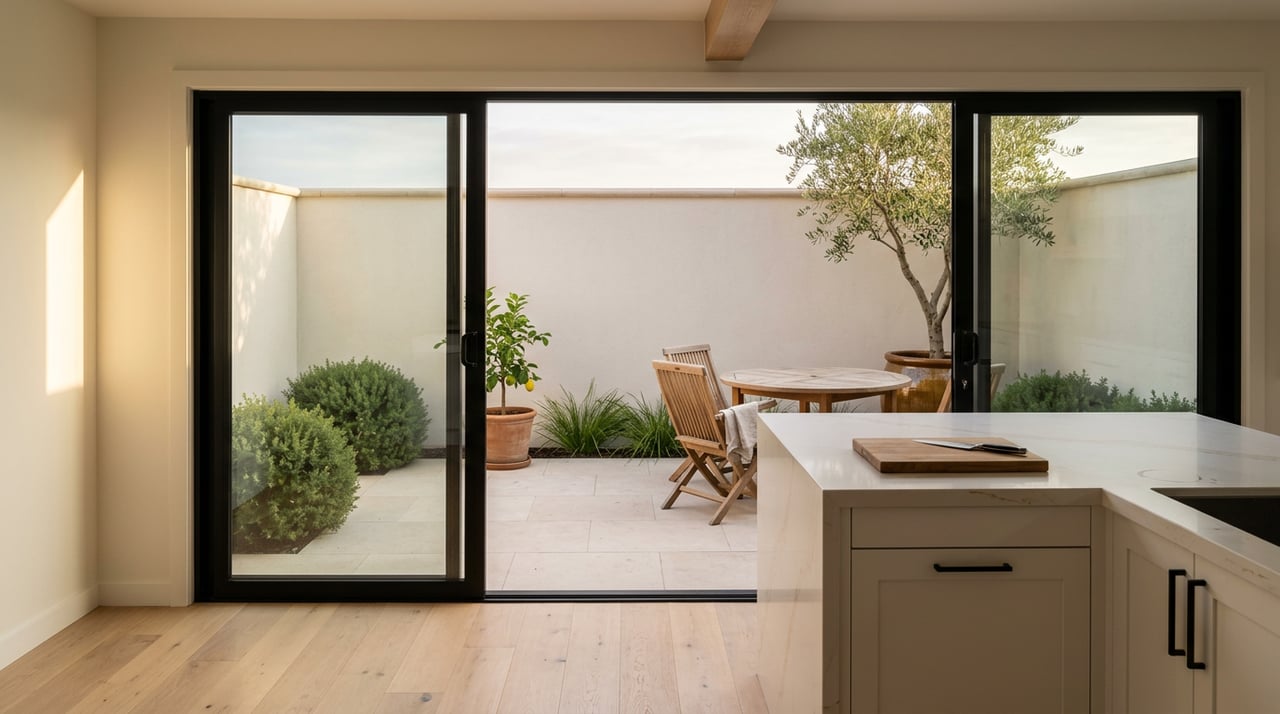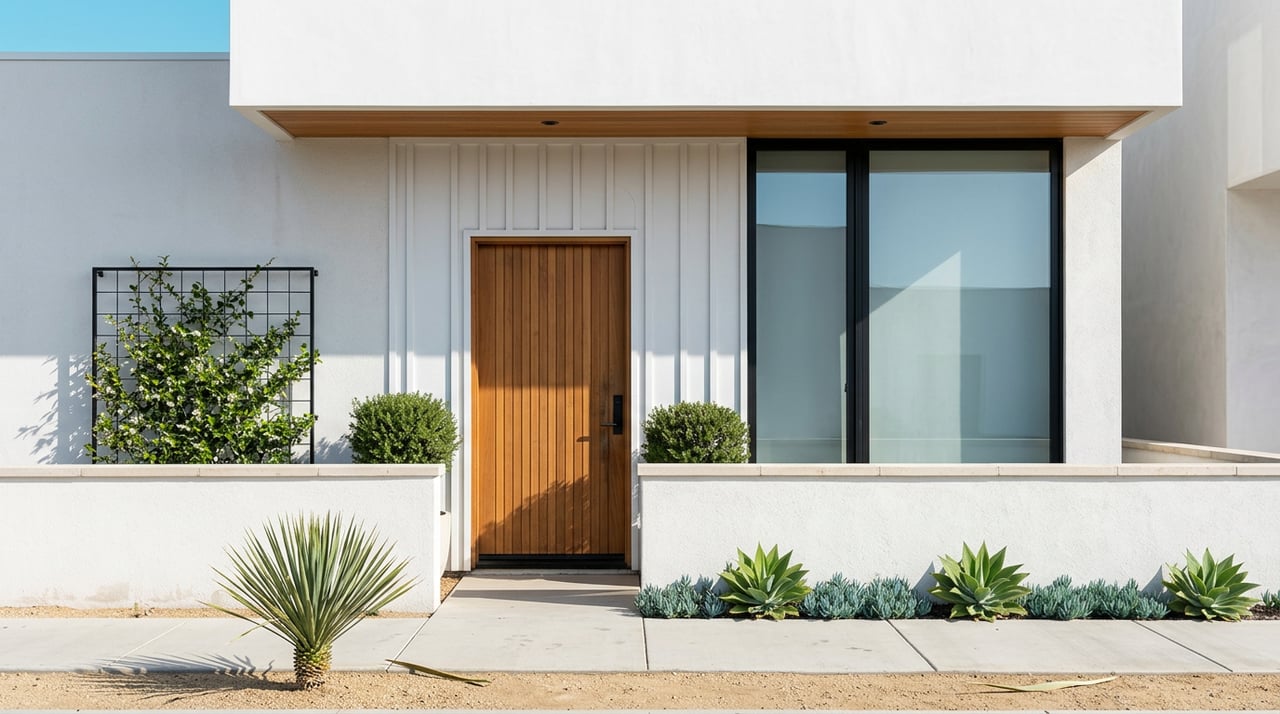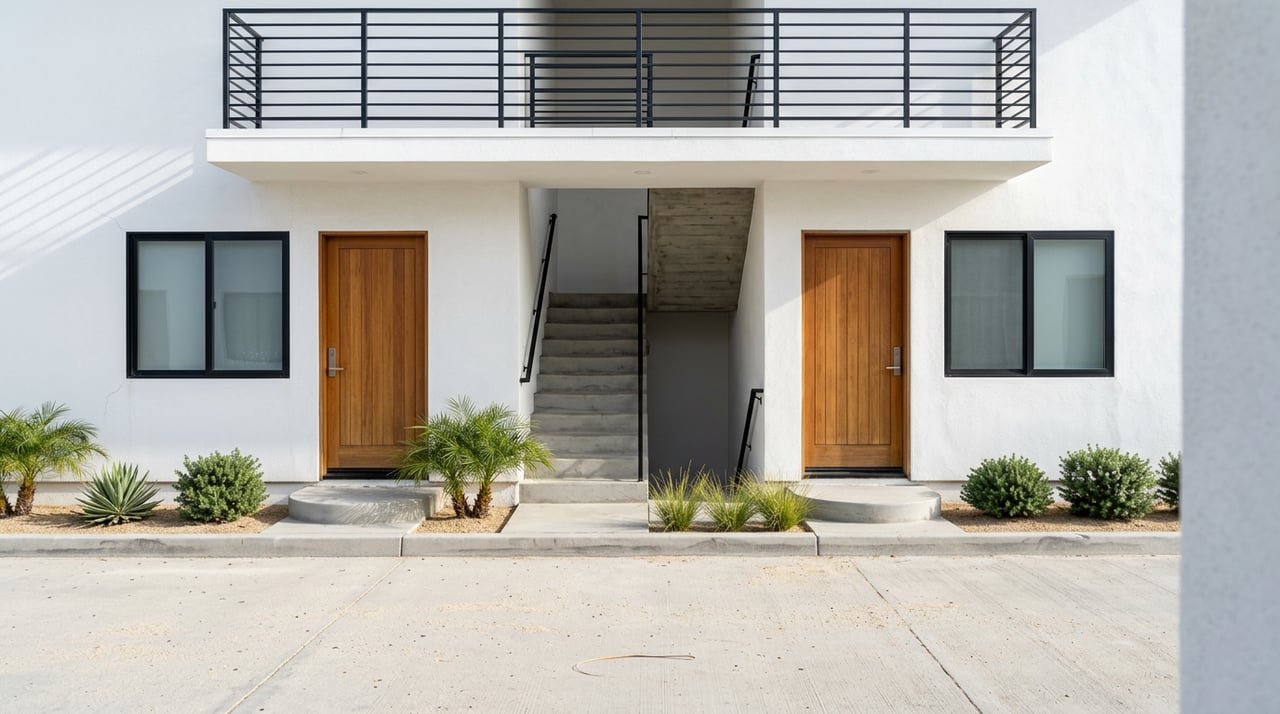
Walk two blocks of Mission Beach and you'll pass homes that look almost identical from the sidewalk. Same vintage beach cottage bones, same distance to the boardwalk, same price range on paper. But one of them can legally host a weekend of vacationers paying premium summer rates, and the other cannot, no matter what the seller's listing photos suggest or what the previous owner was doing with it last July.
That difference has nothing to do with square footage, lot size, or renovation quality. It comes down to a piece of paper the City of San Diego issues, caps at a fixed number, and will not let you carry over when you buy the house.
If you're comparing Mission Beach against other San Diego coastal neighborhoods, this is the mechanism the median price never shows you. Two properties can look identical on a portal and carry two entirely different investment theses.
The Cap Most Buyers Never Ask About
San Diego regulates short-term rentals through its Short-Term Residential Occupancy program, and it treats Mission Beach differently than the rest of the city. Everywhere else, whole-home short-term rentals fall under Tier 3 and are capped at 1 percent of citywide housing stock, roughly 5,400 licenses total. Mission Beach gets its own category, Tier 4, with a cap set at 30 percent of the neighborhood's housing units. Against a base of roughly 3,500 units in the community, that works out to around 1,080 licenses, an order of magnitude denser than what the ordinance allows anywhere else in the city.
The city set the number that high because it reflects reality. Before the ordinance took effect, short-term rentals occupied close to 40 percent of Mission Beach's housing stock, a concentration unmatched anywhere else in San Diego County. The 30 percent cap wasn't an arbitrary planning choice. It was an attempt to bring an already tourism-heavy neighborhood down to a number the city could regulate, not a number designed to make room for growth.
That's the first thing worth sitting with if you're comparing Mission Beach to Pacific Beach or Del Mar as an investment target. This isn't a market with room to expand. It's a market that was already saturated and got a ceiling put on it.
Why the License Doesn't Come With the Keys
Here's the part that catches buyers off guard during escrow. A Tier 4 license is not transferable. Not to a new owner, not to a different unit, not even to the same owner's next property. The city's own program page confirms licenses are tied to the individual host, and they don't convey between ownership or location. When a Mission Beach property with an active, income-producing Tier 4 license sells, that license does not go with it. The buyer starts from zero.
And starting from zero currently means starting from a closed door. As of the city's most recent published status update in mid-August 2026, the Tier 4 waitlist remains closed. The cap was reached, the last open application window ran from July 1 through August 15, 2025, and the city has said it will only reopen applications once the existing waitlist works through attrition, meaning license holders who don't renew or get revoked for violations. There is no published timeline for that. No new window has been announced.
So the honest version of the pitch for a licensed Mission Beach property is this: you're not buying the ability to run a short-term rental. You're buying one of the roughly 1,080 licenses that already exist, attached to a house, held by someone who has to personally reapply if they want to keep operating it after a sale, or forfeit it. If you're the buyer of an unlicensed Mission Beach property today, you are not buying a short-term rental play. You are buying a long-term or mid-term rental play, or a personal residence, full stop, unless you're prepared to wait for a lottery cycle that doesn't currently exist.
Every Tier 4 license in Mission Beach already belongs to someone. The only way a new one becomes available is if an existing holder gives theirs up.
What Actually Separates the Tiers
| Tier 3 (citywide) | Tier 4 (Mission Beach) | |
|---|---|---|
| Cap | 1% of citywide housing stock (~5,400 licenses) | 30% of Mission Beach units (~1,080 licenses) |
| Status in 2026 | Under 1,000 licenses remained available through the first half of the year | Fully allocated, waitlist closed |
| Transferable at sale | No | No |
| Minimum stay | Set by host, subject to Good Neighbor rules | Two nights |
| Reporting | Annual renewal | Quarterly utilization reports to the city |
| Ongoing use requirement | Must remain in active use to retain license | Minimum 90 days of rental use per year to avoid non-renewal |
| Total fee (application + license) | $1,170 | $1,170 |
Both tiers cost the same to obtain. The difference is availability, and what you have to do to keep what you have. A Mission Beach Tier 4 holder who doesn't hit the 90-day annual utilization threshold or skips a quarterly report risks losing a license they cannot easily get back, in a program that currently has no waitlist to reapply through.
The Enforcement Layer Changed in 2026
For years, unlicensed hosts in Mission Beach and the surrounding 92109 zip code operated on a practical loophole. The city suspected plenty of listings were unlicensed but had no direct way to force platforms like Airbnb or Vrbo to hand over host identities. California Senate Bill 346, the Short-Term Rental Facilitator Act, closed that gap when it took effect on January 1, 2026. It gives cities the authority to demand addresses, listing URLs, and host identity information directly from booking platforms, with fines running up to $10,000 per day for platforms that refuse. Hosts operating without a license already faced fines starting at $1,000 per day. What changed is that the city can now actually find them.
For a buyer, this matters beyond compliance trivia. It means the informal workaround some sellers may have relied on, operating short-term without a license and hoping enforcement stayed thin, is a materially riskier bet in 2026 than it was two years ago. If you're underwriting a Mission Beach purchase on the assumption you'll just list it short-term regardless of license status, price that risk in.
One more due diligence detail worth flagging if a Mission Beach property includes an accessory dwelling unit. Most ADUs are not eligible for short-term use under the ordinance at all. The exception is narrow: only companion units permitted before October 15, 2017 qualify. If a listing mentions rental income from a detached unit, confirm the permit history in writing before you're past your contingency period, not after.
The Political Piece Buyers Tend to Skip
The current framework isn't necessarily permanent, and the neighborhood's regulatory future is an active political question right now, not a settled one. Mission Beach sits within San Diego's City Council District 2, which also covers Point Loma, Ocean Beach, Clairemont, and part of Midway. The incumbent is termed out, and the June 2026 primary drew seven candidates for the seat, with the top two advancing to a November runoff. Five of the seven favored tightening the STR ordinance further. Only two, Richard Bailey and Josh Coyne, campaigned on keeping the current framework in place.
None of that changes today's rules. But if you're buying with a decade-long hold in mind, the direction of political sentiment in the district that governs your license is a relevant fact, not a scare tactic. A cap that already sits below its historical operating level and a council seat where most candidates favor further restriction is a combination worth factoring into how you underwrite future upside, not just current cash flow.
What This Means If You're Comparing Neighborhoods
If short-term rental income is central to your Mission Beach thesis, the property you're evaluating isn't really a house. It's a house plus a license status, and those two things need to be underwritten separately. A licensed property carries real, if capped, income potential and trades to a thinner pool of buyers who understand and want that asset. An unlicensed property, no matter how close to the boardwalk, needs to pencil as a long-term rental or personal-use purchase, because that's what the law currently allows for a new buyer without an existing license.
That's a different conversation than the one most portals and median-price headlines are having. It's the one worth having before you write an offer.
A Few Questions Worth Asking Before You Write an Offer
If the seller currently runs a short-term rental, will the license transfer to me? No. Tier 4 licenses are non-transferable between owners, locations, or dwelling units. You would need to apply on your own, and as of the city's most recent update the Tier 4 waitlist remains closed.
Can I get on a waitlist right now if I want to operate a whole-home rental in Mission Beach? Not currently. The application window that opened July 1, 2025 closed August 15, 2025, and the city has said new applications will only be accepted again once the existing waitlist is exhausted through attrition.
Does an HOA or building's rules matter even if the license situation works out? Yes. Some Mission Beach buildings prohibit short-term rentals entirely through their CC&Rs, regardless of what the city ordinance allows. Always confirm this in the governing documents before assuming a license means you're clear to operate.
Buying in Mission Beach means underwriting two separate assets in one transaction: the property and, where it exists, the license attached to it. If you're weighing a Mission Beach purchase against other coastal San Diego neighborhoods and want a read on how a specific property's license status affects its real investment picture, that's exactly the kind of construction-informed, detail-level conversation Ben Smith has built his practice around. Start Your Home Journey — Book a Free Consultation.